
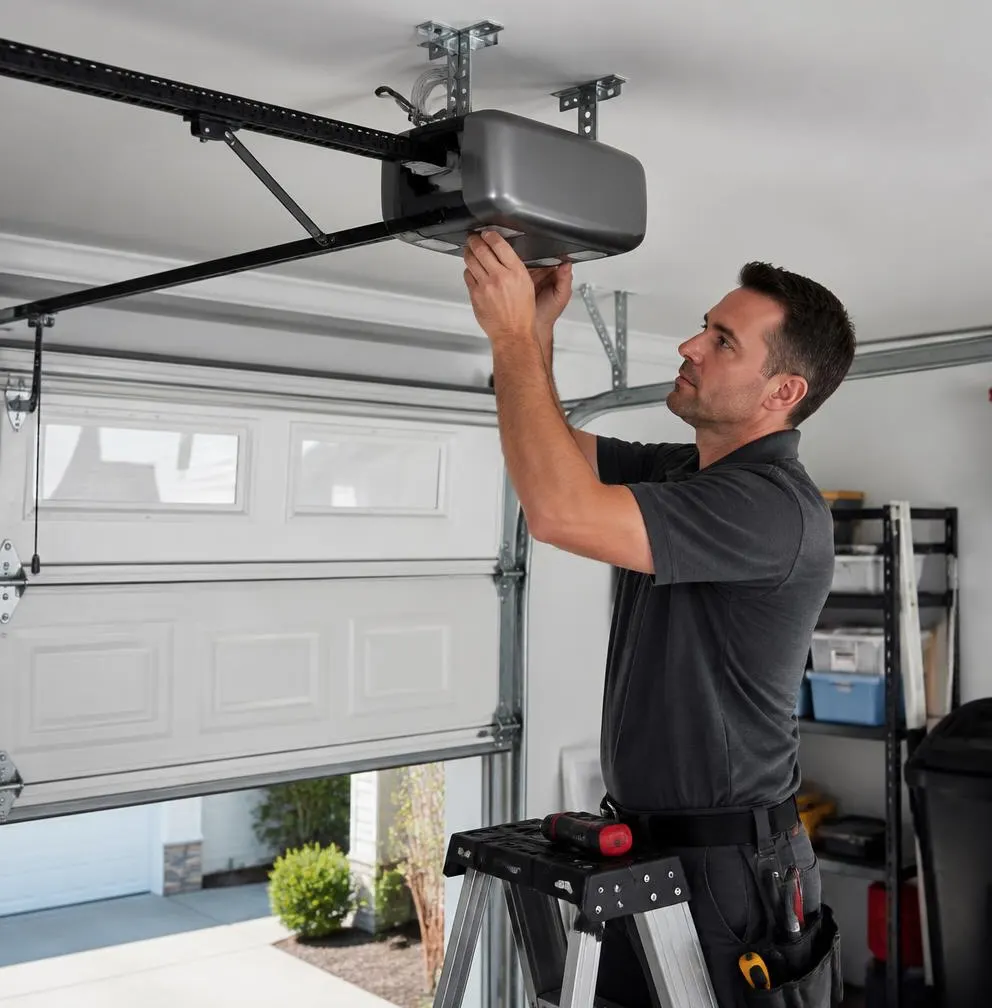
The Mistake Most People Make First
When a garage door stops opening, the first instinct is almost always to blame the opener. People unplug it, plug it back in, swap the remote batteries, or hold the wall button down harder, hoping something resets. It's a tempting first move because the opener is the part you interact with every day — it has a light, a hum, a little chain or belt you can see moving. It feels like the obvious suspect.
The problem is that the opener is usually the last thing a technician checks, not the first. Most doors that won't open are stuck for mechanical reasons that have nothing to do with the motor, and repeatedly hitting the button or forcing the door by hand can turn a simple fix into a bigger repair, especially if a spring is involved.
Symptoms Worth Noting Before You Call
What the door does (or doesn't do) when you try to open it tells a technician a lot before they even arrive. Pay attention to which of these matches your situation:
- Door doesn't move at all, no sound from the opener
- Opener hums or clicks but the door stays put
- Door opens a few inches, then reverses or stops
- Remote doesn't work, but the wall-mounted button does (or vice versa)
- Door feels unusually heavy if you try to lift it manually
- You heard a loud bang from the garage recently
The Order a Technician Actually Checks
1. Power to the Unit
Before touching anything mechanical, a technician confirms the opener is getting power. Garage outlets are often on GFCI circuits, and those trip easily after heavy rain or high humidity gets into the outlet box — common after the inland remnants of a tropical system move through in late summer and fall. The fix here is just resetting the breaker or GFCI, no parts involved.
2. Safety Sensors
If the door starts to close but reverses, or won't close at all, the photo-eye sensors near the floor are usually next. Spider webs, dust, and pollen buildup on the lenses can block the beam, and low morning sun can wash it out entirely. The fix is cleaning the lenses and realigning the brackets so both sensors face each other squarely — often a five-minute job once identified.
3. Remote and Wall Control
Dead batteries, a remote that's lost its programming, or interference from a new device on the same frequency can all stop a signal from reaching the opener. A technician tests the wall button directly to isolate whether the problem is the remote or the opener itself.
4. Springs
If the door won't budge and feels heavy when lifted by hand, a broken torsion or extension spring is the likely cause — especially if you heard a bang beforehand. Springs do more work than people realize, and a broken one means the opener simply isn't strong enough to lift the door alone. Cooler fall mornings can be the tipping point for a spring that's been wearing out all year, since metal contracts slightly as temperatures drop. This is not a homeowner repair; torsion springs are under heavy tension and require the right tools to replace safely.
5. Cables and Pulleys
A frayed or snapped cable can let one side of the door hang unevenly or jam entirely. A technician checks both sides for fraying, rust, or a cable that's slipped off its pulley.
6. Tracks and Rollers
Humidity and moisture around garage framing can cause wood to swell slightly, nudging tracks out of alignment over time. Bent or dirty tracks, or rollers caked with pine debris and grit, can bind the door partway through its travel.
7. Drive Mechanism
Last on the list is the opener's internal drive — a disconnected trolley, a stripped gear, or a belt that's slipped off its track. This is the actual opener failure people assumed was the problem from the start.
When to Call Raleigh Garage Door
If you've checked power and the sensors and the door still won't move, or if you heard a bang and the door feels heavy, stop trying to force it and call. Raleigh Garage Door handles both spring repair and replacement and garage door opener repair, and a technician will run through this same checklist on-site with the right tools and safety equipment for tensioned springs.
If your garage door in Raleigh, Cary, Apex, Wake Forest, Durham, Garner, Knightdale, or Holly Springs won't open, call Raleigh Garage Door for prompt, reliable service from a local technician who shows up ready to fix it right the first time.